
The Filtration Industry's Response to the Pandemic
The role of air filtration during COVID-19: HEPA and ULPA filters, portable purifiers, and why ventilation became a frontline health measure.
"Healthy buildings are the first line of defense against this novel coronavirus... We need more outdoor air and better filters."
Joseph Allen, Associate Professor of Exposure Assessment Science at the Harvard T.H. Chan School of Public Health and Director of the Harvard Healthy Buildings Program.
Air pollution has become a global problem and affects nearly all of us. Indoor air quality has become one of the most important issues over the past years as more and more countries shift their focus towards the health and well-being of building occupants. Most people in the industrialized world spend up to 90% of their time indoors. Exposure to air contaminants, from dust to spores, bacteria, viruses, and chemical compounds, has a direct influence on people's immune systems and can cause a variety of conditions, from allergies to cancer, or an epidemic disease like COVID-19.
The global crisis due to coronavirus has permeated every aspect of our healthcare systems. Since the advent of modern medicine with its understanding of communicable disease control and the related role of airborne pathogens, clean air has been closely linked to health-care facilities and the well-being of their occupants. Maintaining healthy indoor air quality is a general, basic, yet extremely important necessity. While this is always true, it is imperative in times of a wider health crisis to avoid not only the direct spread of a virus, but to support people's immune systems against more serious impacts of an aggressive disease, reducing pressure on overloaded healthcare systems.
Portable air purifiers and high-efficiency filtration
As part of an effort to identify innovations that may help fight the coronavirus outbreak, deploying commercial or industrial portable air purifiers with HEPA or ULPA air filters may help reduce the probability of contagion in locations where contact among people with unknown or known risks is needed. Most air purifiers on the market adopt HEPA filters, as they are internationally recognized as the most efficient filters for capturing particles of different diameters.
While regular air filters are not designed to prevent the spread of viruses, these filters are essential in minimizing the risk, as viruses tend to attach to airborne particulate matter and aerosols. Regular filters with high filtration efficiency (ePM1 filters) are therefore crucial to reduce the risk of diseases transmitted through the air.
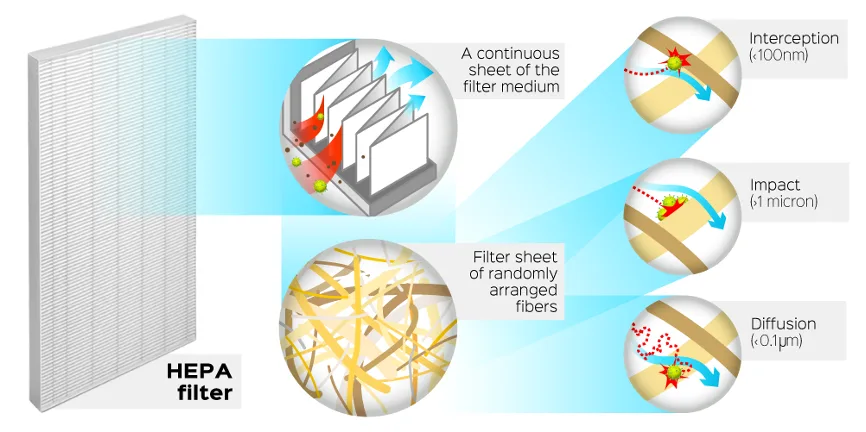
HEPA filters are mandatory in critical environments such as hospitals and healthcare facilities and can also be recommended for medium-risk environments with a high density of people, like airports, schools, or other public spaces. The filter captures 99.97% of particles above 0.3 microns in size, and 95% to 99% below 0.3 microns. Air filters are known to reduce the airborne presence of viral particles, and the reduction of airborne particles by collection in the filters can also reduce the deposition of viral particles on surfaces that are touched.
Filtering the air around a patient may reduce the viral load in their lungs, decreasing the level of immune system activity needed for defeating the disease. Deploying air purifiers in the vicinity of a patient may thus lead to reduced severity of disease and improved outcomes.
Decades of established technology
For air filtration, efficient particulate air (EPA) filters, high-efficiency particulate air (HEPA) filters, and ultra-low penetration air (ULPA) filters have been widely used in various industries and applications for many decades. HEPA filters are recommended for infection control in healthcare settings based on the balance of their high filtration efficiency and lower pressure drops compared to ULPA.
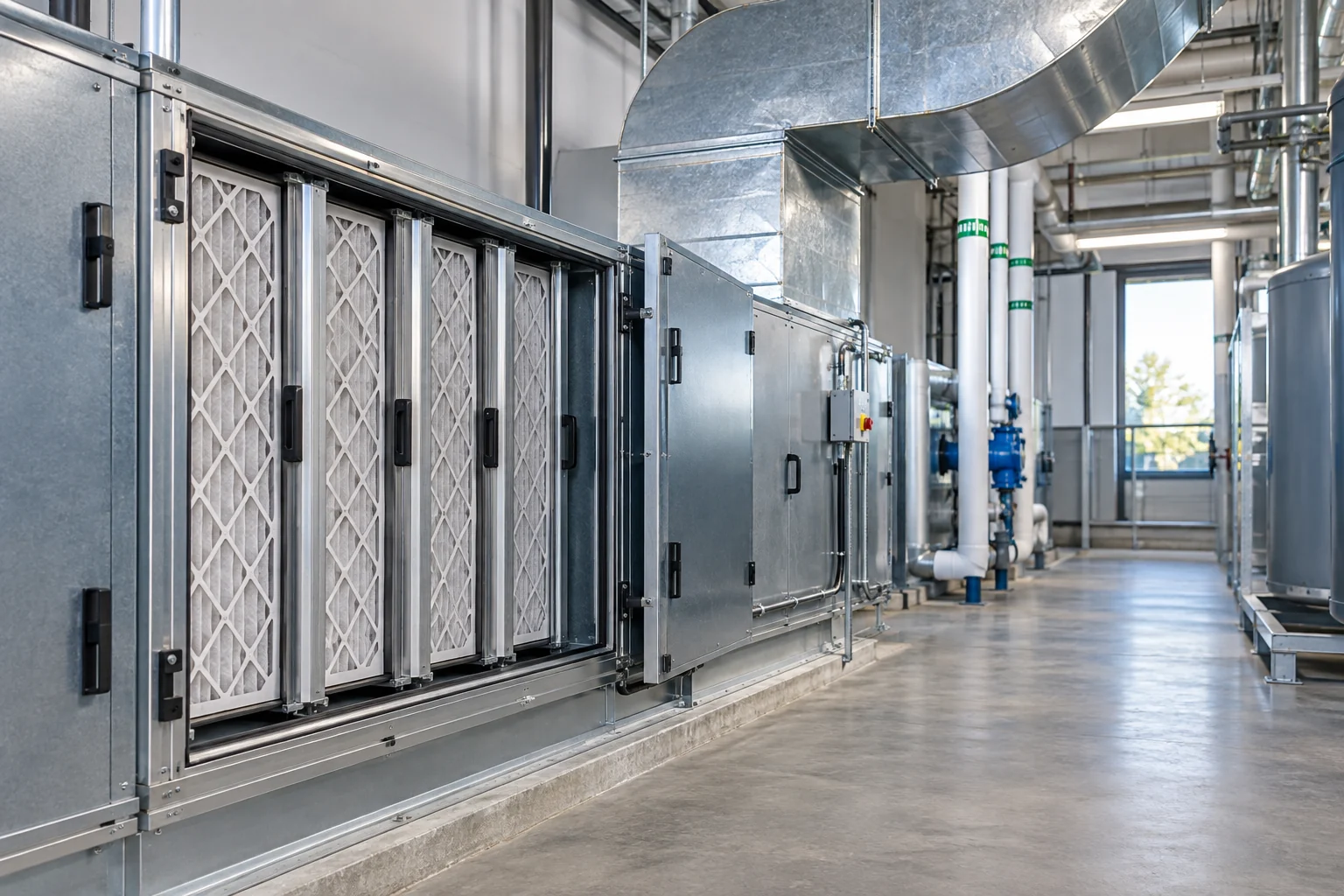
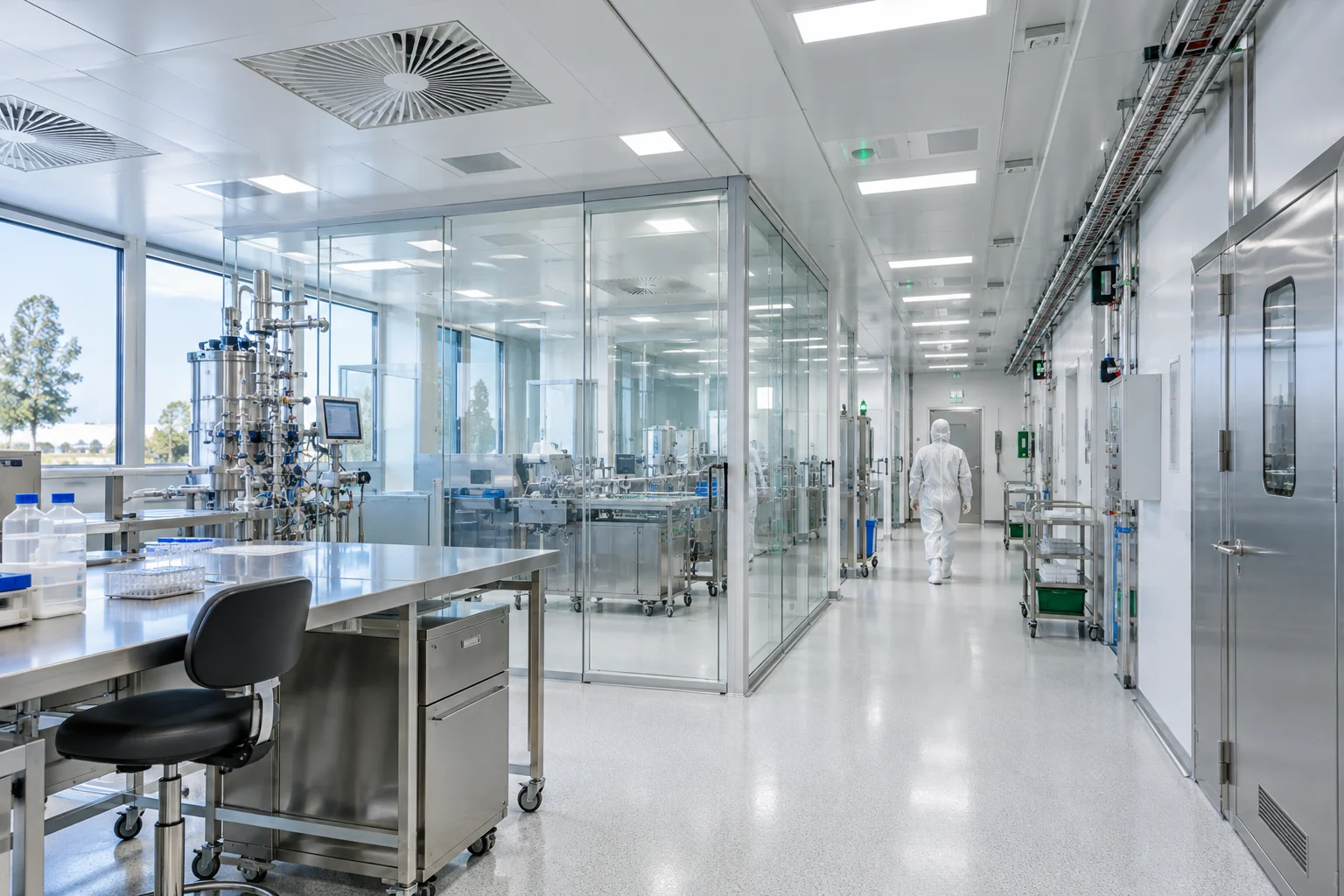
Hospitals and many healthcare facilities have specially designed mechanical systems that can accommodate the levels of filtration they need. They often rely on other systems and control strategies (UV lamps, humidity control, airflow management) to maximize the benefit from filtration. Most importantly, they have dedicated staff who operate and maintain this equipment. The use of masks, respirators, air filtration modules, and other dedicated equipment is an essential intervention in the management of COVID-19 spread.
HEPA filters are also deployed extensively in non-healthcare environments where airborne infectious agents may be present. In general, the greater the number of people in an indoor environment, the greater the need for ventilation with outdoor air: the ventilation rate should be based on the number of people that occupy an indoor space. The CDC has stated that "indoor spaces are more risky than outdoor spaces where it might be harder to keep people apart and there's less ventilation." Giving special consideration to increased ventilation is important when occupancy is high. Beyond reducing risk from airborne transmission of viruses, improving ventilation also benefits indoor air quality by reducing exposure to products used for cleaning and disinfecting potentially contaminated surfaces.
Conclusion
The ventilation industry offers effective solutions to tackle the pandemic by increasing ventilation and improving indoor filtration. Air filtration is of great importance in maintaining an active life for society without causing harm to the health of its members.
Bibliography
- Nazarenko, Yevgen. "Air filtration and SARS-CoV-2." Epidemiology and Health 42 (2020).
- Joseph G. Allen, Harvard T.H. Chan School of Public Health, Harvard Healthy Buildings Program.
- https://www.youtube.com/watch?v=OQ6DhgwgtGw
- https://www.eurovent.eu
- https://www.epa.gov
- https://www.alliedmarketresearch.com
- https://www.nafahq.org
> Migrated from the legacy pandemic-response article (2021). The source bibliography contained protocol-less links that a website scrape had corrupted into local stub files; they are restored here as proper external links. Brand references from the source body were removed.

Insights
Need technical guidance?
Contact FiltriQ to discuss the right filtration approach for your application.