
Cleanroom Air Filtration - Ensuring Precision and Purity
Contamination control in cleanrooms: particle capture, airflow distribution, filter integrity, and the role of ISO 14644 and EN 1822 standards.
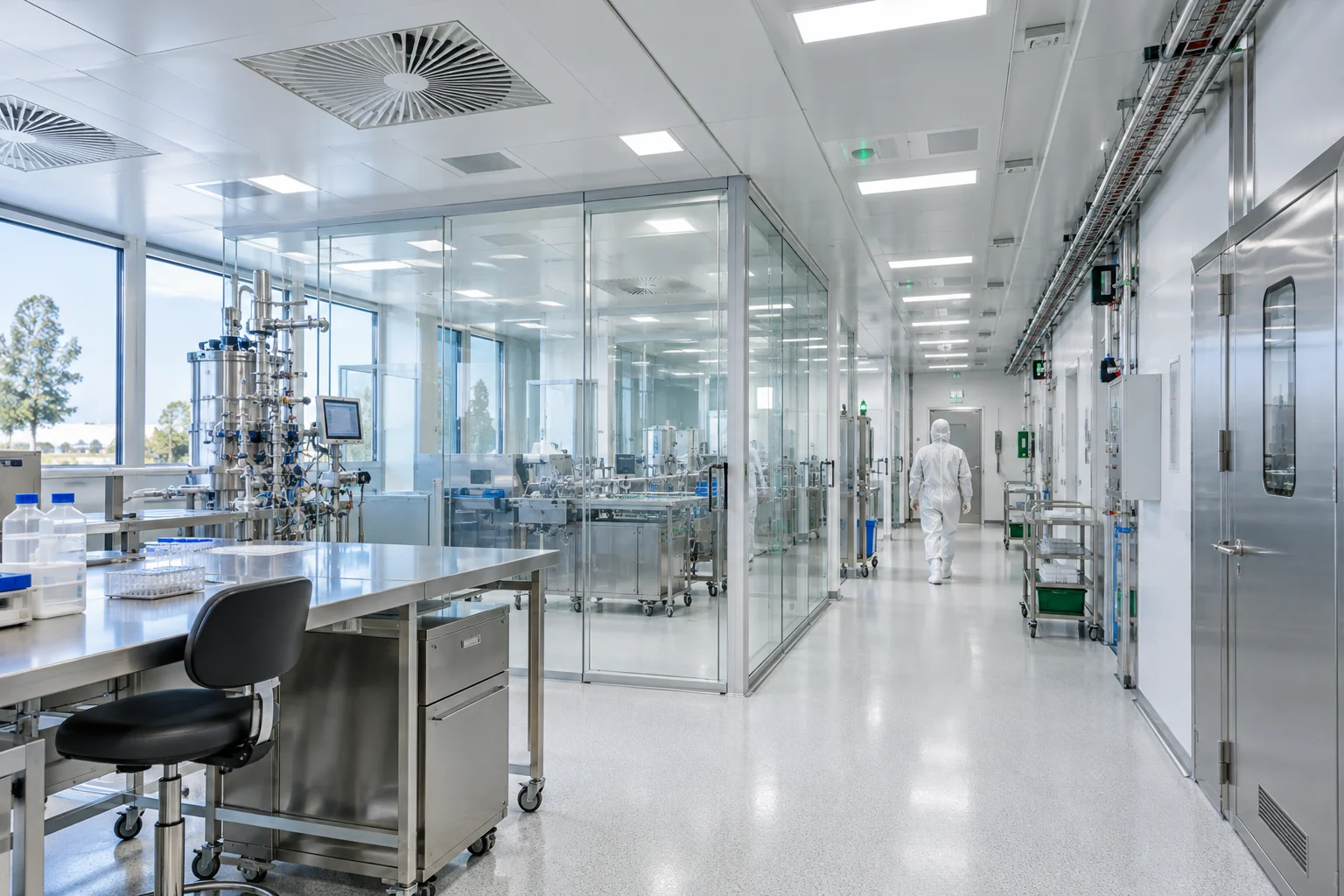
Cleanrooms play a crucial role in a wide range of industries, including pharmaceuticals, biotechnology, electronics, aerospace, and healthcare. These controlled environments maintain stringent levels of cleanliness and sterility to safeguard the quality of products and the well-being of personnel. At the core of any cleanroom lies the air filtration system, which removes particulate and microbial contaminants from the air.
The significance of air filtration in cleanrooms
Cleanroom air filtration is the backbone of contamination control. The integrity of the products and processes within these controlled spaces largely depends on the quality of the air supplied. Even the smallest particles, invisible to the naked eye, can lead to product defects or compromise the accuracy of scientific experiments. Airborne contaminants originate from personnel, equipment, processes, and external environments. Effective filtration maintains a consistent and controlled level of cleanliness.
Challenges in cleanroom air filtration
Particle size and distribution. Cleanroom air filters must capture particles of different sizes, from sub-micron to larger ones. Particles of varying sizes have different impacts on the manufacturing process, so filters with suitable efficiency ratings are essential to meet the required cleanliness levels.
Airflow distribution. Uneven airflow can create areas of stagnant air where particles accumulate. Properly designed air distribution systems ensure a uniform flow of filtered air throughout the space.
Filter integrity. Any breach in a filter can lead to contamination. Regular filter integrity testing and proper maintenance are imperative to guarantee reliable filtration performance.
Adherence to filtration standards
Cleanroom air filtration systems must comply with stringent industry standards:
ISO 14644-1 (classification of air cleanliness). This standard defines the cleanliness classes that cleanrooms must achieve and maintain. Filter selection is driven by the target cleanroom class of the facility.
EN 1822 (HEPA and ULPA filters). High-efficiency filters for critical applications are classified under EN 1822, which provides the particle removal efficiency requirements for the most demanding cleanroom duties.
Advancements in cleanroom air filtration
HEPA filters remove 99.97% of particles as small as 0.3 microns and offer outstanding protection against airborne contaminants, making them a reliable choice for cleanroom applications.
ULPA filters provide even higher efficiency than HEPA filters where ultra-clean environments are essential.
Collaborative cleanroom design combines well-selected filters with optimized air distribution systems and airflow modeling to achieve uniform air circulation and unparalleled air cleanliness.
Maintenance and monitoring
Regular maintenance and monitoring keep cleanroom filtration effective:
- Filter replacement. Following recommended replacement schedules maintains optimal air quality and reduces the risk of unexpected filter failures.
- Filter integrity testing. Regular testing guarantees that filters function as intended and provide the highest level of protection.
- Airborne particle counting. Routine counting monitors cleanliness levels and identifies trends or anomalies that require attention.
Cleanroom air filtration is foundational to maintaining the highest cleanliness standards in controlled environments. With the right filter selection, adherence to standards, and disciplined maintenance, cleanroom operators can ensure precision and purity in their processes.
> Migrated from the legacy cleanroom filtration article. Brand-specific product claims from the source were removed; standards content is unchanged.

Insights
Need technical guidance?
Contact FiltriQ to discuss the right filtration approach for your application.